Two Postcodes, One Story: Planning Getting-Ready Photos When You're Apart
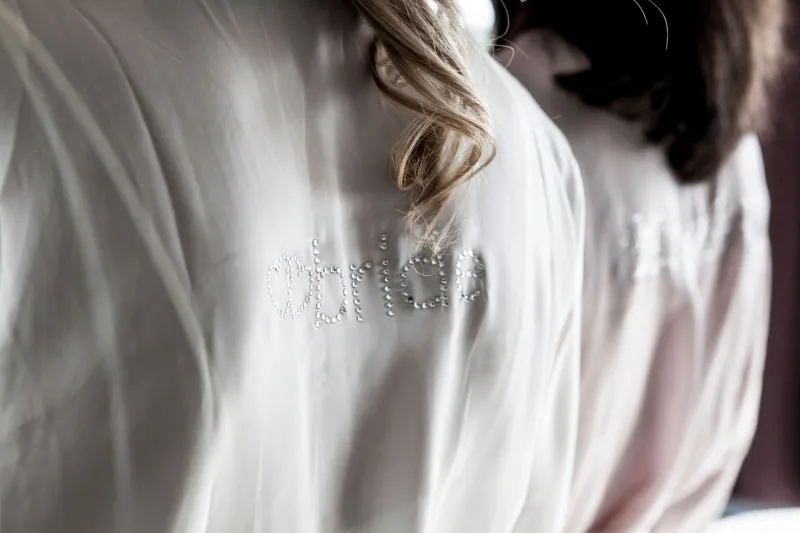
Most wedding mornings don't happen in one place. One of you might be in a hotel room with a suitcase open on the bed, while the other is at your parents' house being told to eat something. Or one of you is at the venue already, and the other is half an hour away, trying to find the buttonhook. Separate locations are normal. The trick is making sure the photographs don't look like two unrelated mornings stitched together.
Start With a Map, Not a Schedule
Before you think about timings, work out the geography. Who is where, how far apart, and what does the journey between the two look like on a normal Tuesday, not just on a wedding day? A twenty-minute drive on a quiet Sunday can become forty-five minutes when there's a tractor, a closed road and a sat-nav that insists on the scenic route.
Your photographer needs to know the postcodes early, not because they're nosy, but because split coverage is really a logistics puzzle. If the two locations are close, it's often possible to move between them without much trouble. If they're further apart, the morning needs a clear plan about who is photographed when, and what gets prioritised if the day runs late.
Don't worry about creating a minute-by-minute spreadsheet. A simple list of locations, rough departure times and who is travelling with whom is enough. The rest can be worked out on the day.
What Each Morning Actually Needs
Not every morning needs the same photographs. The useful question is: what will you want to remember from this particular room, with these particular people?
At one location, the priority might be the quiet bits — your mum doing up the back of your dress, your dad pretending not to be emotional, the last few minutes before everyone leaves. At the other, it might be the noise: cousins arriving, someone making tea, a dog underfoot, the general chaos of a house with too many people in it.
Both are worth having. A good split-morning plan doesn't try to make both locations look identical. It lets each one be itself. If one of you is getting ready in a spare bedroom with a kettle and a stack of toast, that's not a problem to be solved. It's the actual morning.
The Kettle, the Window and the Useful Mess
A few practical things help any getting-ready room photograph well. Light is the big one. If there's a window, try to keep the curtains open and avoid piling bags in front of it. You don't need a styled flat lay unless you want one. What you do need is enough space for people to move without stepping over shoes.
Don't worry about the mess. A bit of mess is honest. The photographs that tend to matter are not the ones of a perfectly arranged perfume bottle. They're the ones of someone squinting into a mirror, a friend holding a dress up against the light, a half-eaten croissant on the side.
If you're in a hotel, ask whether there's a quieter corner or a lounge you can use for the last few minutes. If you're at home, clear a bit of floor near the window and leave the rest alone. A relaxed room is better than a tidy one.
Timing: Leave Room for the Faff
Getting-ready plans often go wrong because they assume everything happens at the speed it happens in real life. It doesn't. Someone needs to find the earrings. Someone else needs to iron a shirt. The car is early, or late, or parked in the wrong place.
Build in a buffer. Not a huge, vague buffer that everyone fills with more things to do, but a realistic one. If you're leaving at midday, aim to be dressed by half eleven. If your photographer is covering both mornings, ask them which parts they need to be there for, rather than assuming they need to be in the room every second. Often the most useful coverage is the last thirty minutes before departure, not the first two hours.
If one of you is getting ready at the venue, it can be tempting to keep checking on the setup downstairs. Try not to. Let the room you're in be the room you're in. The marquee can wait.
Keeping the Atmosphere Light
Split mornings can feel oddly disconnected, especially if you're used to doing everything together. A few small things help. Send each other a photo when you're dressed. Keep the group chat going. Don't treat the separation as a problem to be managed, just as the shape of the day.
It also helps to tell the people around you what's happening. If your photographer is moving between locations, let everyone know roughly when they'll be there. If one group is leaving earlier, say so. Most wedding-morning stress comes from people not knowing what's going on, not from the timings themselves.
Coming Back Together
The story comes together later: at the ceremony, at the first look, at the moment you see each other properly. The photographs from two separate houses or rooms don't need to match. They need to feel like they belong to the same day. That happens naturally when both mornings are given a bit of room to breathe.
So keep the plan simple. Know where everyone is. Leave a bit of time. Don't tidy the bedroom. And let the two mornings be what they are — separate, a little chaotic, and part of the same story.