Forget the Bonnet: Photographing Wedding Transport With People Still in It
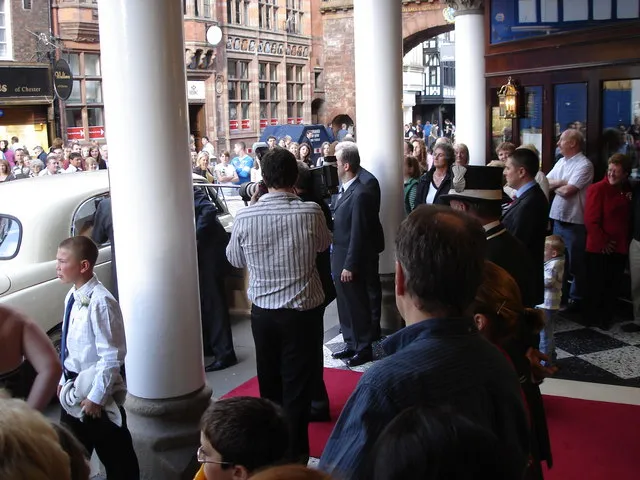
Photo: Ian Cunliffe, CC BY-SA 2.0, via Wikimedia Commons
There's a photograph in almost every wedding gallery I've ever seen, and I've taken it myself more times than I'd like to admit. It's the car. Parked. Empty. Ribbon straight, bonnet polished to a mirror, badge catching the light. It looks like a brochure. It tells you nothing about the day and nothing about the people in it.
Which is a shame, because transport is one of the few bits of a wedding where the nerves are completely visible. You're about to get married. You're sitting in the back of something that smells faintly of someone else's air freshener. Your hands are doing that thing. That's the photograph. The car is just the room it happens in.
The bit before the engine even turns
Some of the best transport frames happen while the vehicle is stationary and nobody is performing for the camera. A dad doing up his cufflink against the door. A bridesmaid shuffling along the back seat because the dress won't fold. Someone's nan being helped in, one hand on the roof, one hand on an arm, taking it slowly and enjoying every second of the fuss.
If your photographer is with you at the getting-ready house, the arrival of the car is a natural beat in the morning — a small gear change that nudges everyone towards the ceremony. It's worth mentioning to whoever is driving that there's no rush. A minute of standing about at the kerb is not a minute wasted. It's usually the minute where the good faces happen.
Kerb to door: fifty paces worth protecting
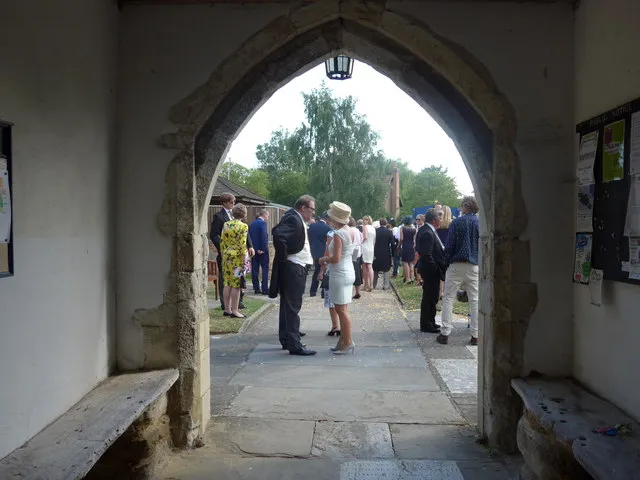
The walk from the car to the church door, or the car to the ceremony room, is genuinely one of the most underrated stretches of a wedding day. It's short. It's usually quiet. And it's loaded. The last look at each other before the doors open. The squeeze of a hand. The moment a bride realises the gravel is going to be a problem for the heels.
This is why I'd rather spend the time here than on a three-quarter angle of a grille. Ask your photographer to travel with you, or to be waiting at the arrival point rather than already inside. It's a ten-second walk that can produce five or six frames you'll actually look at in twenty years, and it costs you nothing in the schedule.
Not every arrival is a vintage Rolls
Most UK weddings I photograph don't have a vintage Rolls. They have an uncle's Discovery. Or a splitter van that the band also brought. Or a borrowed campervan with a hand-painted sign in the window. One of the loveliest arrivals I've shot was a tractor, driven by a farmer in a waistcoat, with the bride perched on the passenger step like it was the most normal thing in the world. It was.
These vehicles aren't a compromise on the aesthetic — they're the story. A bus full of guests is a moving photograph waiting to happen: faces at windows, a flask of tea being passed forward, someone's hat blowing off at the roundabout. A convoy of borrowed classics is a lovely thing to see from the outside, but the frame that matters is your grandad climbing out of the passenger seat with a look on his face like he's twenty-five again.
Shiny things photograph themselves. People don't. That's the trade you're making.
A short shot list that doesn't eat the portrait window
You don't need twenty transport photographs. You need about five, and they should slot into moments that were happening anyway. Something like this:
- The vehicle arriving, with people in it. Not parked and empty. Full and slightly chaotic.
- The helping-in. Doors, hands, hems, and someone saying "mind your head" for the fourth time.
- The last quiet moment before the walk. Whoever's travelling with you — parent, best mate, sibling — in the back seat, mid-breath.
- The walk from kerb to door. Frames that include the building, the lane, the weather, the guests turning round.
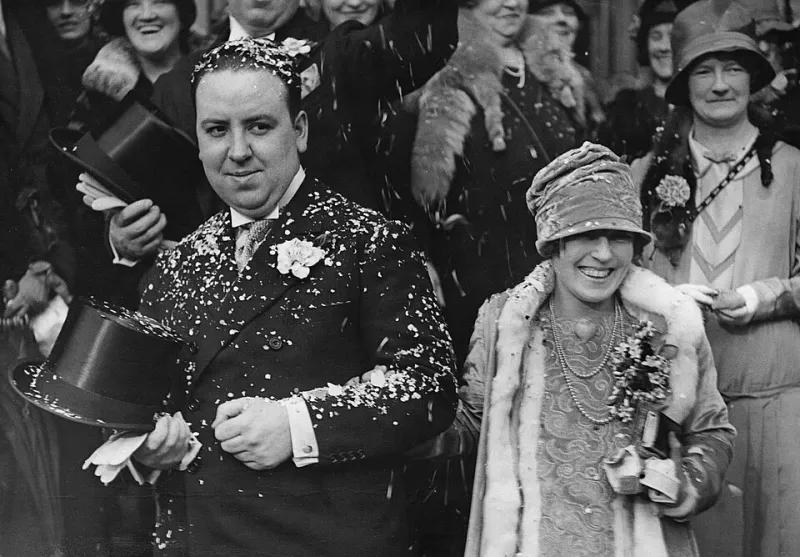
- The departure. Confetti in the air, engine running, someone waving a shoe.
That's it. Twenty minutes of the day, spread across two or three natural points. It doesn't need its own slot in the timeline and it certainly shouldn't come out of the window you've set aside for couple portraits — the light in that window is finite and the car will still be there afterwards.
A quick note on UK lanes and turning circles
Practical things, briefly, because they affect the photographs as much as the schedule. Village lanes are narrow and a lot of churches sit at the end of something that was never designed for a 1930s limousine. Buses need room to turn and often need to drop off further away than you'd think, which is fine — a short walk to the ceremony is a gift, not a problem. And if it's raining, the umbrellas come out at the door, which is honestly one of the better photo opportunities of the entire morning.
Tell your photographer where the vehicle is parking and where you'll be walking from. Two minutes of logistics saves a lot of running about later, and it means the camera is already pointing the right way when the door opens.
The frame you'll actually keep
Nobody has ever framed a photograph of a clean bonnet and put it on a mantelpiece. They frame the one where their mum is laughing in the back of a borrowed Jaguar, or where their dad is holding the door and pretending he isn't emotional, or where the two of them are halfway up a gravel path with confetti already stuck to their shoes.
The car is a lovely detail. But it's the getting there, not the thing itself, that's worth photographing. Build your transport plan around the people in the seats and the walk to the door, and the shiny bits will look after themselves.