Pew to Party: How to Move Between Two Venues Without Losing the Thread of the Day
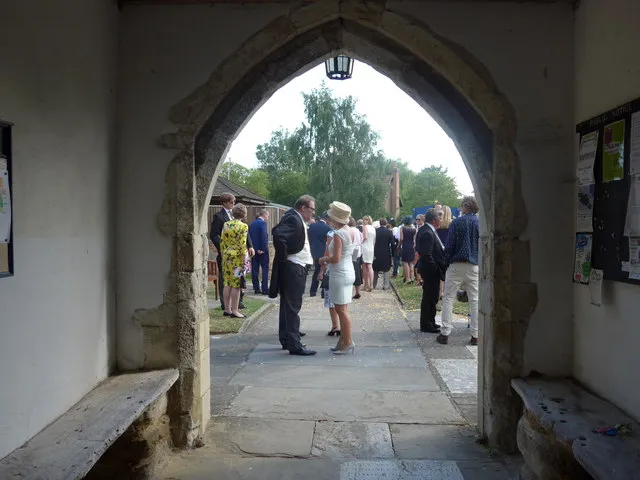
Photo: Basher Eyre , CC BY-SA 2.0, via Wikimedia Commons
Two venues sounds lovely on paper. A village church with cool stone and old hymns, then a barn with festoon lights and a dance floor. Or a registry office in town followed by a marquee in a field. The ceremony in one place, the party in another. It works beautifully — but only if you treat the journey as part of the wedding day rather than an administrative detail to be squeezed.
Start with the gap, not the venue
Most two-venue wedding stress comes from pretending travel takes less time than it does. Google Maps gives you a number for an empty road on a Tuesday. It does not account for a coach driver waiting for Auntie Jean, a tractor on a B road, or thirty guests all trying to park in the same small gravel car park at once.
As a rough guide, give yourself at least thirty minutes more than the satnav suggests for any move involving guests. If you are using coaches, make that forty-five. If the route involves a town centre, a level crossing or a venue with a single-track lane, be even more generous. That buffer is not wasted time. It is the difference between arriving flustered and arriving with a drink in your hand.
It also helps to think about the shape of the day. A church ceremony at 2pm and a barn reception starting at 4pm can work, but only if the barn is fifteen minutes away and your guests are good at following instructions. A 3pm ceremony and a 5pm reception forty minutes apart is tighter than it looks. Ask your photographer and venue coordinators what they have seen work — they will usually tell you the honest version.
Let the light decide the order
In the UK, daylight is a moving target. A winter wedding might mean the sun is already low by 3pm; a July wedding gives you light until nearly 10pm. If you are moving between venues, think about where you want the photographs that need the best light.
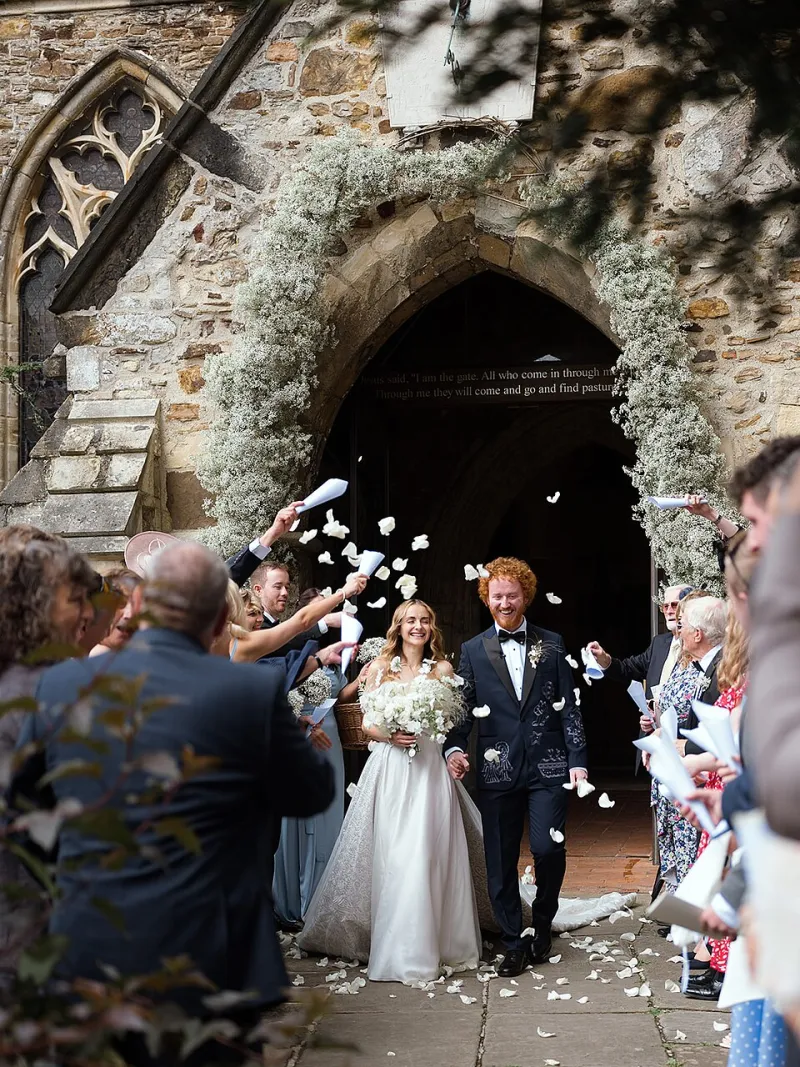
If you want couple portraits in the golden hour, don't book a ceremony that finishes at 4pm in November and a reception an hour away. You will spend the best light in a car. If you want confetti outside the church, make sure the ceremony finishes with enough time for guests to gather before they all pile onto a coach. If you want twilight shots at the reception venue, plan the move so you arrive before the light goes completely.
This is not about staging every minute. It is about not accidentally designing a day where the most photogenic moments happen while everyone is on the M6.
Tell guests one clear thing
Guests do not need a minute-by-minute itinerary. They need to know where to be, when, and what happens next. A simple card or WhatsApp message with the ceremony time, the reception address, the travel time and a note about parking will do more than a twelve-page schedule.
Be specific about the gap. If there is an hour between the ceremony ending and the reception starting, say so. Give people a pub, a park or a village green to aim for. If the reception venue is not open yet, tell them. If parking is limited, say that too. If the walk from the car park to the marquee is across a field, mention the field. In October, that field will be muddy, and nobody wants to discover that in heels.
It also helps to nominate one person — a friend, a sibling, a best man — who knows the plan and can answer questions on the day. Not to manage the wedding, just to field the small stuff so you don't have to.
The journey can be part of the photography
A documentary approach does not stop when you leave the ceremony venue. The move between places is often full of real moments: the quiet few minutes in the car, the confetti caught on a coat, the bridesmaids carrying shoes across a car park, the groom checking his watch, the guests pointing at a rainbow over the reception venue.
If your photographer is travelling with you, that can be a lovely bit of the day. Not posed, not staged — just the two of you in the back of a car, or walking from the church to the pub, or arriving at the barn and seeing it all set up for the first time. If your photographer is meeting you at the reception, they can still capture the arrival, the first look at the room, the guests spilling out of coaches with their coats and their confetti.
I often think the bit between venues is where the day exhales. The ceremony is done. The party hasn't quite started. Everyone is a little bit giddy. Leave space for that.
Keep the convoy calm
One of the easiest ways to make a two-venue day feel chaotic is to have everyone follow the couple. Suddenly you have a convoy of cars, a couple of wrong turns and a bride directing traffic from the passenger seat. Instead, let the couple travel separately — in a nice car, with a driver, or with one trusted friend — and send everyone else ahead with clear directions.
If you are using coaches, put one person in charge of each coach and give them a printed list of who should be on it. It sounds old-fashioned. It works. If guests are driving themselves, give them the postcode and a rough arrival time, and don't worry if they arrive early. Early guests in a pub garden are not a problem.
Build in a plan B that isn't panic
Weather, traffic, a late registrar, a missing ring box — something small will always wobble. The buffer is there for that. If the ceremony runs twenty minutes late, you don't want the reception venue ringing you to ask where everyone is. If the coach gets stuck, you want the venue to know. A quick call from your nominated person can save a lot of stress.
And if the gap feels too long, don't fill it with more stuff. Let people sit in the sun, or the drizzle, with a drink. Let the kids run around. Let the couple have ten minutes alone. A two-venue wedding doesn't need to be a military operation. It needs a bit of breathing room and a clear plan.
One thread, two places
Finally, remember that guests will feel the move more than you will. You will be in the car, or having a quiet moment, or taking photographs. They will be finding parking and wondering where the loos are. A little repetition helps: same flowers, same readings, same music, same people. The thread of the day is not the venue. It is you, and the people who came to celebrate with you.
Get the travel right, tell everyone what they need to know, and let the journey be part of the story. Pew to party, church to barn, registry office to marquee — it can all feel like one long breath rather than a relay race.