When Daylight Leaves Early: A Winter Wedding Timeline That Still Feels Relaxed
A winter wedding in the UK has a different rhythm. The light is lower, the afternoons are shorter, and the pub by the venue becomes far more appealing than a windswept field. That is not a problem. It is just a different brief. Late 2026 and early 2027 couples are not working with long summer evenings, so the timeline needs to respect the daylight you actually have.
The good news is that winter light can be beautiful. It is soft, low and forgiving. Windows become your best friend. Candles stop looking like a styling extra and start doing proper work. And a dance floor photographed with flash has an energy that summer weddings sometimes lack. You just need to put the right things in the right part of the day.
Start with sunset, not the schedule
Before you fix the ceremony time, look up the sunset for your date. In late November it can be around 4pm. In December it can be closer to 3.50pm. By late January it is creeping back towards 4.30pm or 4.45pm, and by February you might get closer to 5.15pm. These are rough guides, not rules, and they vary across the UK. The point is simple: in winter, the usable daylight is front-loaded.
That does not mean every winter wedding needs a midday ceremony. It means you should know where your daylight is going. If you want confetti outside, couple portraits in natural light and group photographs without flash, they all need to happen before the light goes. If you would rather have a long, lazy morning and a late afternoon ceremony, that is fine too — but plan for the photographs to be flash-led and candlelit, and make sure that suits the mood you want.
The ceremony: aim for late morning or early afternoon
For most winter weddings, a ceremony around 1pm or 1.30pm is a sweet spot. It gives you the morning for getting ready in window light, then leaves enough daylight after the ceremony for confetti, a few group photographs and twenty minutes with the two of you. If you are marrying in a church, the service might run for an hour, so a 1pm start still gets you out into the best of the afternoon light.
If you have your heart set on a 3pm ceremony, that can work beautifully. You just need to be honest about what follows. The confetti might be at dusk. The couple portraits might be by porch light. The group photographs might need flash. None of that is bad. It is simply a different set of photographs. The mistake is expecting summer light at a winter time.
Registry office weddings often have fixed slots, so you may not have much choice. If your slot is late in the day, build in a short walk beforehand or a few photographs in a nearby square while the light is still doing something. A twenty-minute window is enough.
Confetti: put it where the light is
Confetti is one of those moments that can look completely different depending on where the sun is. In winter, you want it as soon as possible after the ceremony, while there is still some light and before guests start drifting towards the bar. Have the confetti cones ready and ask a couple of people to hand them out rather than leaving it to chance.
If the weather is dry, go outside. If it is not, do not force it. A indoor confetti moment can still be lovely, but it needs space and a little planning. Check with your venue about what is allowed — dried petals and biodegradable confetti are usually the safest bet, but rules vary.
Couple time: twenty minutes, not an hour
Winter is not the season for disappearing for an hour of portraits. The light will not wait, and neither will your guests. Twenty minutes is usually plenty. A short walk around the venue, a few photographs by a window, a quiet moment under a porch while the rain does its thing — that is enough.
Dusk portraits can be genuinely beautiful. The sky goes blue, the venue lights come on, and the whole thing feels a bit cinematic without trying too hard. If you want those photographs, aim to step outside about twenty to thirty minutes before sunset. That is when the light has shape but is not completely gone. If it is raining, a covered doorway or a bright window inside can do the same job.
Do not think of it as chasing the last light. Think of it as using the light you have, then letting it go. The day does not need to be a photo shoot. It needs to be a wedding with some photographs in it.
Drinks reception: let the windows work
After the ceremony, the drinks reception is where winter venues can shine. Low sun coming through a window, candles on a ledge, guests clustered near a fire — these are the scenes that make a winter wedding feel warm rather than dark. If you can, avoid blocking the windows with a photo booth or a table plan. Let the light in.
Group photographs are worth doing early, while there is still some natural light. If the light has already gone, do not panic. A good photographer can use flash or continuous light without making it look like a school portrait. The key is to keep the list short and to have someone who knows the families on hand to gather people.
The dance floor: embrace flash
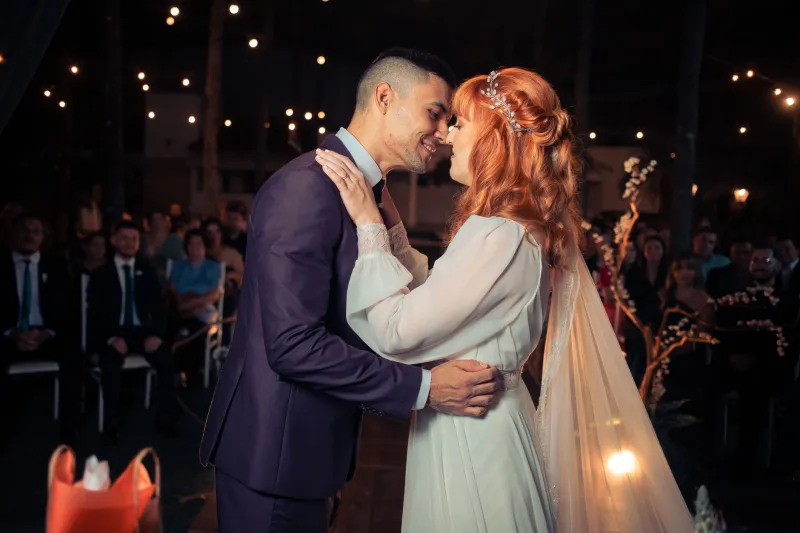
Once the sun has gone, flash becomes part of the story. Not the harsh, deer-in-the-headlights kind, but the kind that picks out a ridiculous dance move, a grandmother being spun around, a best friend mid-speech. Winter weddings are made for that. The dark outside makes the inside feel cosier and more alive.
If you are worried about flash, talk to your photographer about how they use it. A documentary approach with flash can be unobtrusive and full of energy. It is not the same as a formal portrait setup. It is there to catch the moment, not to interrupt it.
A sample winter timeline
This is only a starting point, but it shows how the day can breathe in late 2026 or early 2027:
- 11.30am — getting ready, window light, details and quiet bits
- 1.00pm — ceremony
- 1.45pm — confetti outside, while the light is still decent
- 2.00pm — short group photographs, kept to a tight list
- 2.20pm — twenty minutes of couple portraits
- 2.45pm — drinks reception, candles and window light
- 4.00pm — wedding breakfast
- 6.00pm — speeches
- 7.30pm — first dance and dance floor, flash-friendly
Adjust according to your venue, your ceremony length and your own priorities. The important thing is not the exact times. It is the order. Daylight for the things that need daylight. Flash and candlelight for the things that do not.
Keep a weather margin
Winter weather is unpredictable, so do not schedule every outdoor moment back to back. Leave ten minutes between confetti and group photographs. Have a indoor backup for portraits. Tell your venue you might need a covered spot. A little margin means a bit of rain does not derail the whole afternoon.
A winter wedding is not a compromise. It is a different kind of day. Plan around the light, leave room for the unexpected, and let the dark do some of the work. The result can be every bit as relaxed, honest and full of life as a summer wedding — just with better candles.