The Tent Won't Sit Still: Photographing a Marquee Wedding Without Fighting It
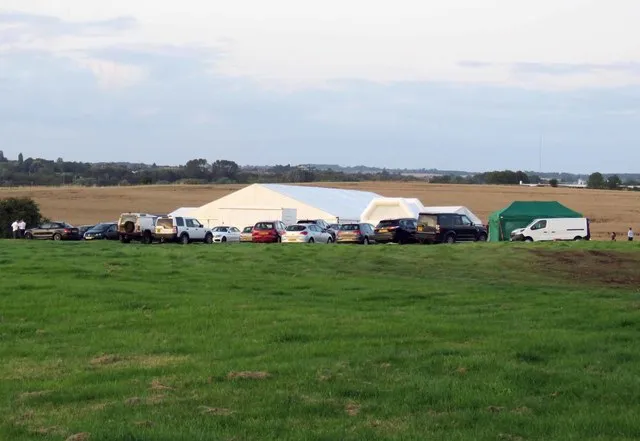
Photo: Andrew Tatlow , CC BY-SA 2.0, via Wikimedia Commons
Marquees are sold on romance: canvas, candles, a field at dusk. Then you get one and discover it's less a room than a very large, slightly opinionated tent. The sides flap. The light moves. Sound behaves like it's been let out of a box. And somewhere between the ceremony and the wedding breakfast, the whole space has to change shape.
That's not a problem to solve. It's the texture of the day.
I photograph a lot of marquee weddings across the UK, and the ones that work best aren't the most tightly managed. They're the ones where couples have made a few quiet decisions in advance, then let the canvas get on with being canvas.
The light never sits still
An empty marquee at 2pm is a different building from the same marquee at 7pm. The walls glow, the roof softens overhead light, and the moment the sun drops, every bulb and candle starts doing more work. If your photographer visits the site, ask them to come at the same time of day as your portraits — not just for a quick look at the field. A marquee that feels airy at lunch can turn into a warm, low-lit box by the time you cut the cake.
That shifting light is a gift. It means your photographs won't all look like they were taken in the same hour. It also means the timeline should follow the light rather than the other way around.
Sides up, sides down, and the wind in between
One of the first practical decisions is whether the sides stay up. Open sides connect you to the view and let in beautiful, changing light. They also let in wind, rain and the occasional wasp. Closed sides make the marquee feel intimate and keep the sound in — sometimes too much in.
Most couples end up somewhere in the middle: open for drinks, closed for dinner, one side peeled back when the evening softens. Have a default and a fallback. Tell your venue or marquee company what you'd like, but accept that the weather may vote. A relaxed marquee wedding isn't one that ignores the forecast; it's one that has already decided not to argue with it.
Sound has legs
Speeches in a marquee can either feel wonderfully close or strangely echoey, depending on where you put the top table, the PA and the band. Canvas doesn't absorb sound like a hotel wall. If you're near neighbours, check the curfew and think about where the music points. A relaxed day still needs a sound plan; it just doesn't need a committee.
The flip is part of the day
Most marquees have to be turned around between ceremony and dinner. Chairs move, tables appear, the floor plan changes. It can take forty minutes or more. The temptation is to hide it, or to fill it with scheduled photos. Don't. Give guests a bar, a lawn, a bit of shade or a fire pit, and let the flip happen in the background. Some of the best photographs come from that in-between hour: shoes off, jackets over chairs, someone rescuing a table plan from the wind.
Details that look better a bit wonky
Marquee styling can tip into stage set very quickly. The details that photograph honestly are usually the useful ones: a basket of blankets, a jug of water by the door, wellies in a row, festoon lights strung slightly unevenly, flowers that carry on from the table to the bar. Bunting that moves is better than bunting that's been ironed into submission. Let things be touched.
Build a timeline with breathing room
Marquee weddings often involve more moving parts than a hotel: suppliers arriving across a field, a generator, a band with a van, maybe a loo hire and a shuttle. The schedule needs slack. If the ceremony is at 2 and dinner at 5, don't fill every minute. Light changes fast in the UK, especially in autumn. A timeline that follows the light — drinks outside while it's still soft, speeches before the windows go dark, portraits in the last hour of sun — will feel calmer than one that fights it.
Tell your photographer the boring stuff
Where the power is. Which side the sun sets on. Whether the band is in the main tent or a side tent. What time the marquee company needs to start the flip. None of it sounds romantic, but it's the difference between a photographer who's guessing and one who's ready. A site visit, a quick call, a shared note — that's enough.
Let the tent be a tent
Rain on canvas is one of the great sounds of a British wedding. Flapping sides, a dress caught in the wind, someone holding a napkin over a candle — these are not failures of planning. They're the day. A marquee never behaves like a ballroom, and that's exactly why it's worth photographing.