The Day the Tarmac Softened: Keeping a UK Wedding Calm When the Heat Turns Up
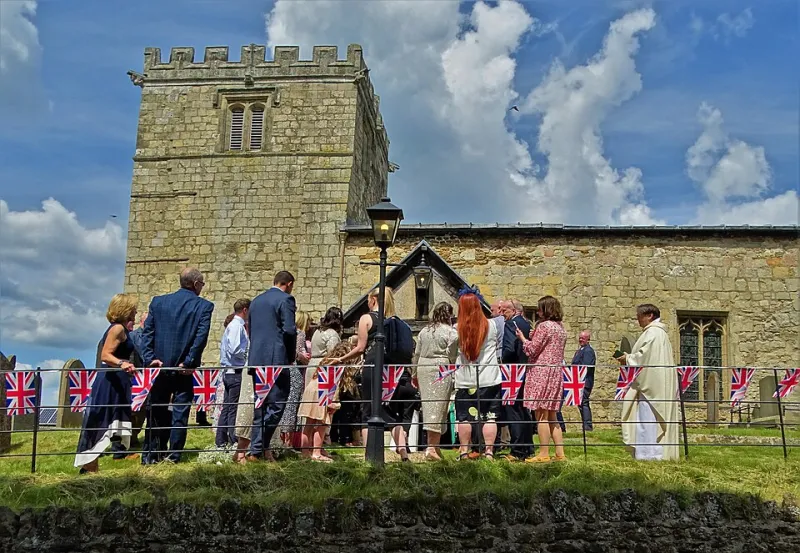
Photo: Neil Theasby , CC BY-SA 2.0, via Wikimedia Commons
A UK wedding in a heatwave is a funny thing. We spend most of the year designing days around the possibility of rain, then the forecast lands on 31°C and suddenly the marquee is a greenhouse, the church porch is prime real estate and everyone is quietly calculating how long they can stand in direct sun before their foundation gives up.
The temptation is to treat heat like a logistical emergency. Build a minute-by-minute heat plan. Move everything. Issue instructions. But a wedding day is not a military operation, and the photographs that matter most rarely come from the bits that were tightly controlled. They come from the rhythm of the day — and heat changes that rhythm whether you like it or not.
The forecast is not a brief
A hot day is not automatically a bad photography day. It is simply a different one. The light is harder, the pace is slower, the guests are more likely to be found in clusters under trees rather than circulating on the lawn. If you fight that, you end up with a day that feels like a fire drill. If you work with it, the wedding starts to look like itself — just with more fans and fewer jackets.
So rather than rewriting the whole schedule, treat the forecast as a nudge. What are the two or three moments that really need moving? Which bits can simply be allowed to drift? A relaxed day in the heat is usually a day with fewer hard edges, not more.
Move the quiet bits, not the whole day
The biggest practical shift is usually the couple portraits. Mid-afternoon sun in a UK heatwave is not kind to anyone, and standing in it for forty minutes because that is when the timeline says 'couple photos' is a quick route to shiny foreheads and strained smiles.
If you can, borrow twenty minutes early in the day — before the ceremony, when the light is softer and everyone is still fresh — or wait until the evening when the heat has dropped and the venue has that lovely, slightly exhausted glow. Keep the middle of the day for the things that happen anyway: drinks, shade, catching up, ice in glasses.
Ceremonies can also be nudged earlier if the venue allows it. Old churches tend to hold the cool beautifully; marquees and glass-fronted barns less so. Ask what the coolest room is, and don't be shy about using it for speeches or a quiet moment.
Find shade that looks like shade
There is a difference between shade and a spot that merely looks shaded on a plan. Real shade has soft edges, a bit of texture and enough room for people to gather without feeling like they are queuing for a bus.
Look for the church porch, the deep shadow under a mature oak, the north side of a stone wall, a parasol that has been dragged into the right place, the gap between two marquee walls. These are the places where guests naturally end up, fanning themselves with an order of service and saying, 'Christ, it's warm.' That is exactly where the good documentary photographs live.
You do not need to style a shade zone. You need to make sure there is one, and that it is obvious enough for people to use without being told.
Water is a prop you don't have to pose
A water station is one of the least glamorous things you can add to a wedding and one of the most useful. A big dispenser, some glasses, a bucket of ice, a few cold towels if you are feeling organised — none of it needs to match the table plan. It just needs to be easy to find.
The photographs take care of themselves. Condensation on a glass. Someone holding a bottle against the back of their neck. A child fishing ice cubes out of a bucket. A guest topping up a fan with a splash of water. These are not styled details; they are the day's real texture.
If you are having a marquee wedding, ask the venue about ventilation and whether the sides can come up. If you are in a village hall or community venue, check whether there are fans, whether windows open properly and whether there is a cooler room you can use as a retreat. It is deeply unglamorous admin, and it makes the day feel human.
Let the heat show in the pictures
A lot of wedding photography tries to make everyone look airbrushed and unbothered. In a heatwave, that is a losing battle. The more honest approach is to let the heat be part of the story.
Jackets come off. Ties loosen. Hair goes up. Make-up gets a touch of shine. Someone produces a paper fan from nowhere. A bridesmaid stands in front of a fridge. A groomsman rolls his sleeves up and immediately regrets the sunburn. These are not failures of styling; they are the visual record of a day that actually happened.
If you are worried about looking flushed in every photograph, tell your photographer. A good documentary photographer will still find the flattering angles, the shade, the quieter moments. But they will also know that a slightly pink face and a genuine laugh is usually a better photograph than a perfectly lit grimace.
Keep guests comfortable without a rota
The best heatwave plan is the one guests barely notice. A few jugs of water near the ceremony entrance. A basket of fans. Sunscreen in the loos. A note on the order of service saying where the shade is. A venue contact who knows how to open the side door.
You do not need to police people. You do not need to announce every five minutes that it is hot. You just need to remove the tiny friction points that make a hot day feel stressful: nowhere to sit, no water, no escape from the sun, a long walk across tarmac in heels.
And keep an eye on the people who feel it most — older guests, anyone pregnant, small children, the dog if they are along for the day. A quiet check-in is worth more than a laminated heat action plan.
The photographer will be hot too
It sounds obvious, but your photographer is also wearing clothes, carrying equipment and standing in the sun. A ten-minute break in the shade, a glass of water and a bit of flexibility around the portrait timing will make more difference than another twenty minutes of shooting.
That is not a reason to plan the day around the photographer. It is just a reminder that the best documentary work comes from someone who is still alert enough to notice the good stuff — the kid with their feet in a bucket, the grandmother commandeering the best chair in the shade, the couple stealing a quiet minute by the church door.
A loose heatwave rhythm
If you want a shape to hold in your head, think morning portraits, a cool ceremony, a slow drinks reception in shade, a long break for everyone in the middle of the day, then evening portraits once the worst of it has passed. Keep the formal bits short, keep the water coming and leave the rest alone.
A heatwave does not have to turn your wedding into a military operation. It just asks you to loosen your grip a little. Find the shade. Put out the water. Move the portraits. And let the flushed, fanning, ice-cube moments be part of the day rather than something to photograph around.