Rings on a Windowsill: Why Your Wedding Keepsakes Look Better Where They Live
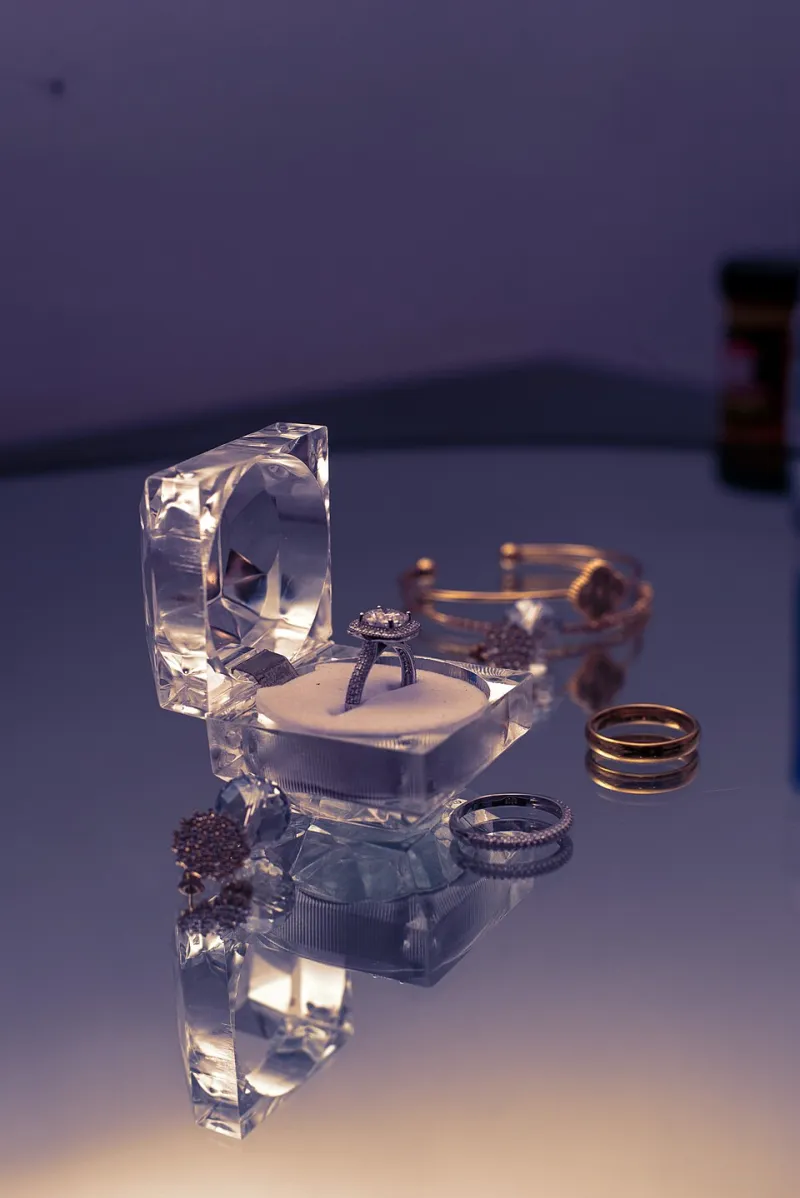
Photo: Pictureperfect photography, CC BY-SA 4.0, via Wikimedia Commons
There is a certain kind of wedding detail photograph that has become almost automatic. Rings on a square of white card. Perfume bottle on a marble slab. Invitation suite fanned out beside a sprig of eucalyptus. It looks tidy, it photographs well, and if that is what you want, fine. But it is worth saying out loud: your wedding details are not a product shoot. They are the small, odd, sentimental things you chose to carry into the day. And often they look far more like themselves when they are photographed where they actually sit.
Start with what you would actually save
Before you gather anything for photographs, ask yourself a simpler question: if the house was going up in smoke and you had thirty seconds, which of these would you grab? The rings, obviously. The handwritten letter from your mum. Your grandmother's brooch. The perfume you wore on your first proper date. The order of service your friend designed. The cufflinks that belonged to your dad.
That is your shortlist. Not every ribbon, box and place card. A handful of things with a bit of weight behind them. When couples send me a long list of props, the photographs tend to get thinner, not richer. When they send three or four objects with a story, the morning has something to say.
The windowsill beats the white card
A documentary approach to details is not about making things look messy on purpose. It is about letting them stay in the room. Rings on the windowsill beside a half-drunk cup of tea. Vows folded on the bed while someone is still asleep in it. Your mum's necklace on the sideboard, just where she left it. A grandmother's hands holding the something-old while she tells you the story behind it.
Those photographs have a sense of place. They tell you it was a real morning in a real room, not a styled set that could have been anywhere. The light is usually better too. UK windowsills are not glamorous, but they give you soft, honest daylight and a bit of context. A white card gives you nothing except a white card.
A small gathering, not a styled shoot
If you want these photographs, the practical bit is simple: gather the objects in one place and hand them over early. Not in a panic between hair and makeup, not after the registrar has arrived. Put them in a shoebox or a cloth bag the night before. Tell your photographer where they will be. Then leave them alone until someone comes to photograph them.
When I arrive, I would rather spend ten minutes with your keepsakes than forty-five minutes rearranging them. Ten minutes is enough to photograph the rings, the letter, the heirloom and the vows in the room where they are sitting. It also means you are not waiting around while a photographer builds a small installation on a chair.
A few things are worth flagging in advance. If an heirloom is fragile, say so. If a letter is private, say so — I can photograph the envelope, the handwriting, the folded paper, without reading a word of it on camera. If the rings are going to be with one of you and the keepsakes with the other, mention that too. Two getting-ready locations means two small collections, not one impossible list.
The people around the objects
Some of the best detail photographs are not really detail photographs at all. They are photographs of people handling details. Your mum fastening the necklace. Your dad putting the cufflinks in. A bridesmaid holding the rings while you have your hair pinned. Your grandmother's thumb running over the edge of the brooch.
Those moments are not staged, and they do not need to be. They happen because the objects are in the room and people are using them. If everything is packed away in a box until the ceremony, you lose that. If everything is arranged on a tray for a photograph, you lose that too. The middle ground is best: keep the things close, let people touch them, and let the photographer work around the edges.
What to do with vows and letters
Handwritten vows are a strange one. Couples often want them photographed, but they do not necessarily want them read. That is completely fair. A photograph of a folded piece of paper with a bit of handwriting showing can say more than a full page laid out flat. It suggests the private thing without publishing it.
If you have written letters to each other, keep them sealed until the morning. If you want a photograph of the envelope, do it before the ceremony. If you want a photograph of someone reading it, that is a different kind of picture — and usually a better one. The paper is not the story. The person holding it is.
When to hand things over
Timing depends on the day, but the general rule is early and once. After the room has been tidied but before the dress goes on. Or while you are having breakfast. Or in that quiet bit when hair is done and makeup is not quite finished. If you are getting ready in a hotel, put the keepsakes on a windowsill or a side table and tell me which side of the room to look at.
Do not save them for the drinks reception. By then everyone is outside, the light has moved, and the rings are on hands where they belong. The morning is the window. It is also when the objects still feel like yours rather than part of the performance.
The honest version lasts
A flat-lay is not a crime. If you love that polished, symmetrical look, ask for it. But if you are hiring a documentary photographer because you want the day to feel like itself, give your details the same courtesy. Let them sit on the windowsill. Let them be held. Let them be slightly out of place.
The photographs you keep coming back to will not be the ones where everything matched. They will be the ones where you can see the room, the light, the cup of tea, and the hands that touched the things you love. That is the difference between photographing keepsakes and photographing a display. One is a picture of objects. The other is a picture of your morning.